After I introduce the topic of natural selection and evolution, we dive into how evolution occurs. (Looking for lesson ideas for natural selection? Head to this post.) How does one species split into two new species? How did one species of finch arrive on the Galapagos and evolve into 13 different species?
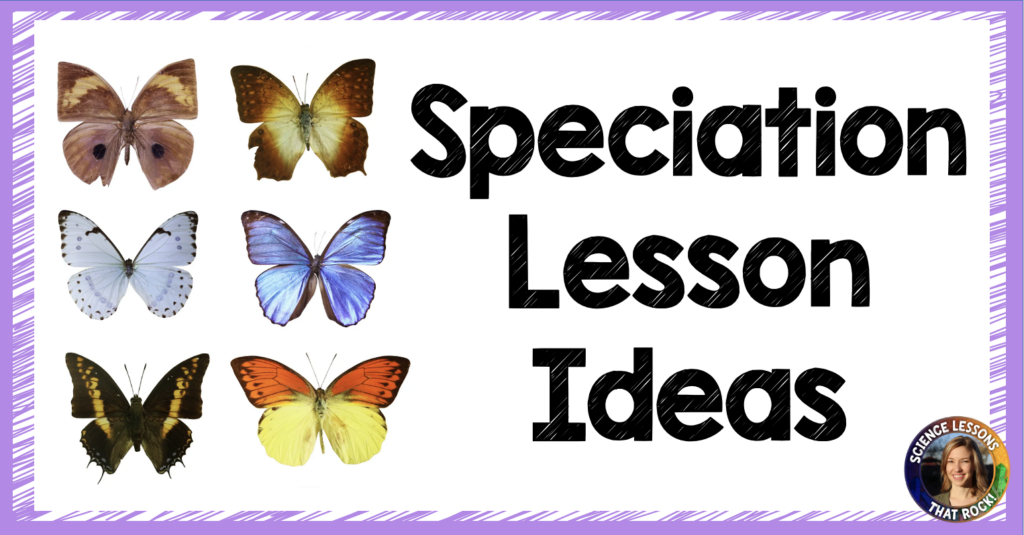
Speciation is the process of populations evolving to become different species. Islands are great case studies of speciation since populations tend to get separated geographically and evolve over time. Here are some lesson ideas you can use to teach speciation to students!
Speciation Lesson Plans
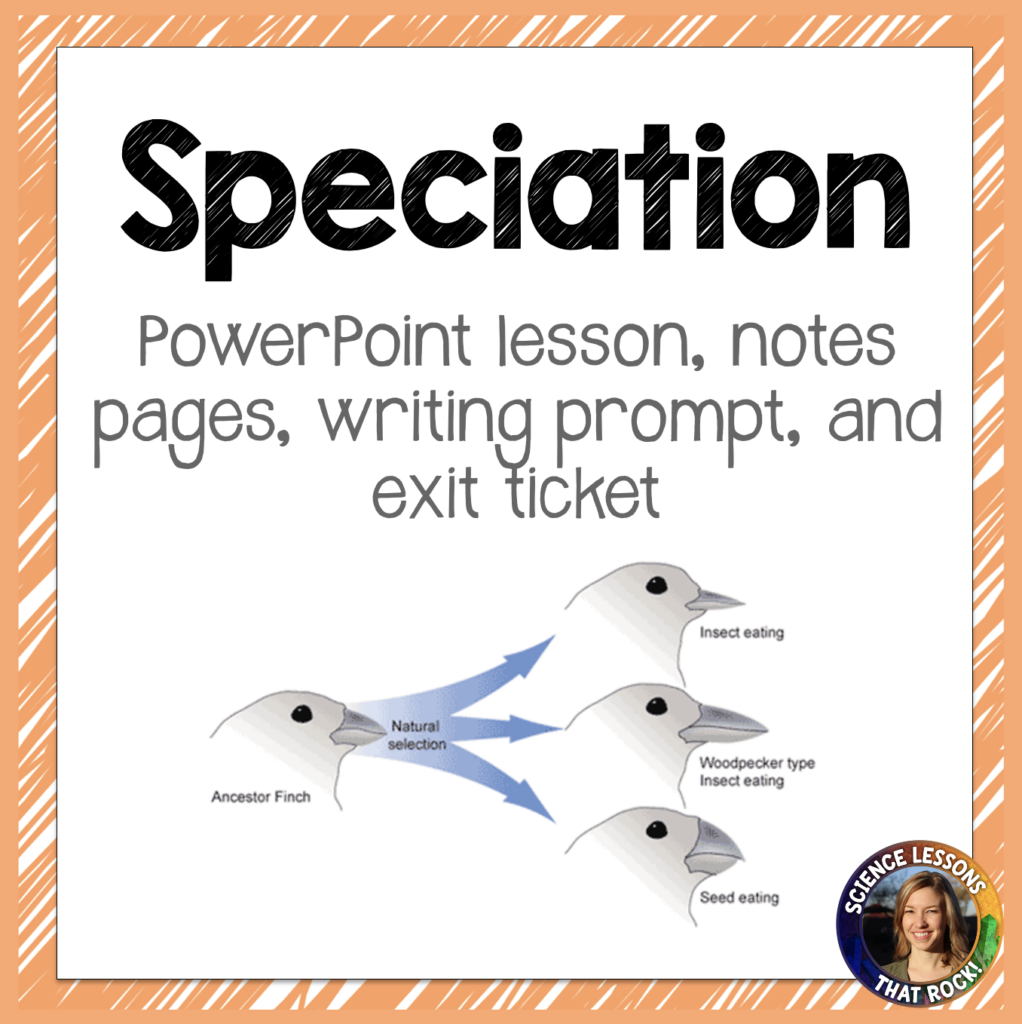
I start with this powerpoint lesson that walks students through how speciation works. Students will learn how different forms of isolation (geographic, temporal, behavioral, etc) lead to changes within populations. You can find the powerpoint on TpT or on my website.
The lesson also links to a GREAT youtube video clip that can be found here.

Any lab that uses candy is a WIN-WIN. In this lab, students model the process of speciation in a fictional population of colorful beetles. The beetles get stranded on different sides of a river and have to adapt to new habitats. All you need is a big bag of skittles! You can find the lab write-up on TpT or on my website.
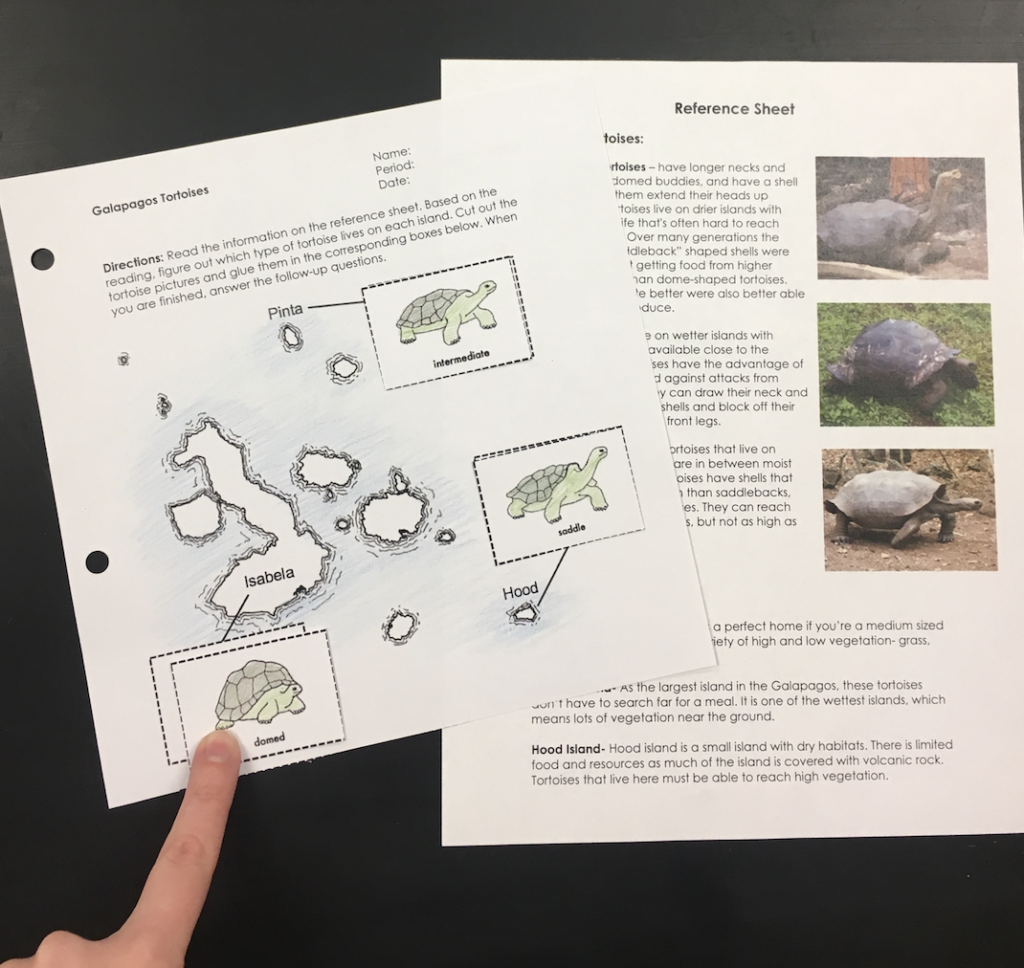
If you teach middle school, this one is for you! In this simple activity, students read about 3 species of tortoises that live on various Galapagos Islands. Students match each tortoise with the correct island based on the length of their neck and the habitat and food types available. You can find it on TpT or on my website.
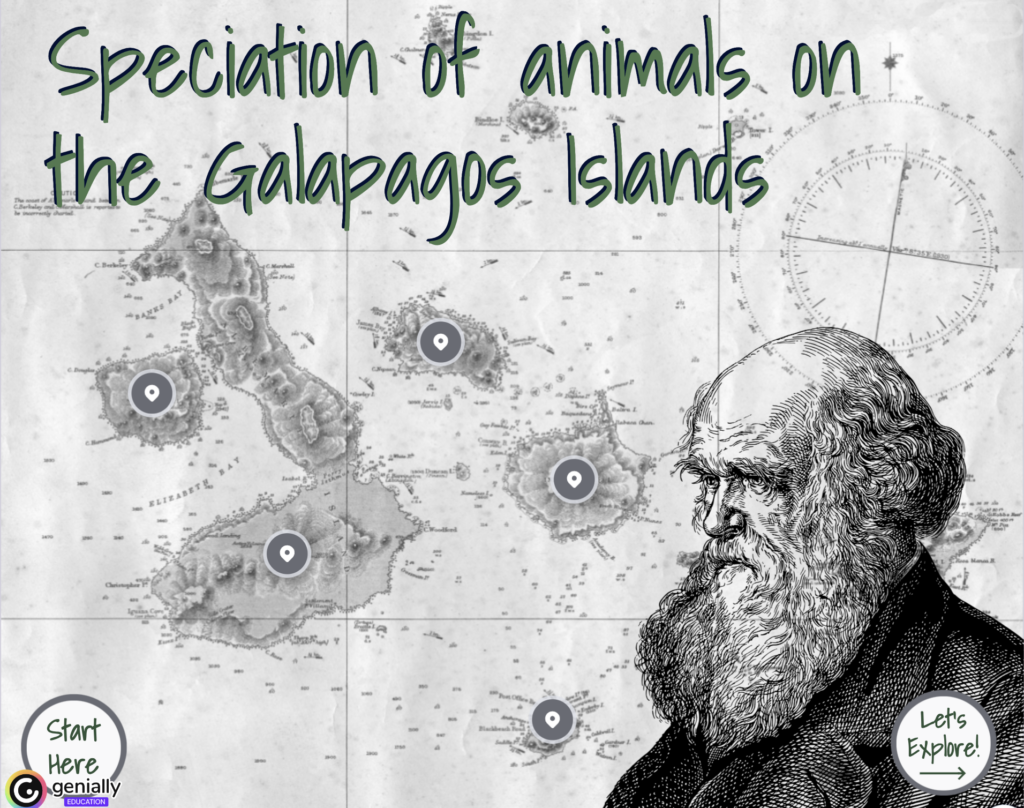
Need a day off from teaching? Try a webquest! In this activity, students work through an interactive webpage and explore speciation of finches, tortoises, and boobies on the Galapagos Islands. Included is a worksheet and Google form self-grading quiz. You can find the webquest on TpT or on my website.
Note: Make sure your school firewall does not blog Genially prior to purchasing.
You might want to check out this website from Berkeley that walks students through the process of speciation.
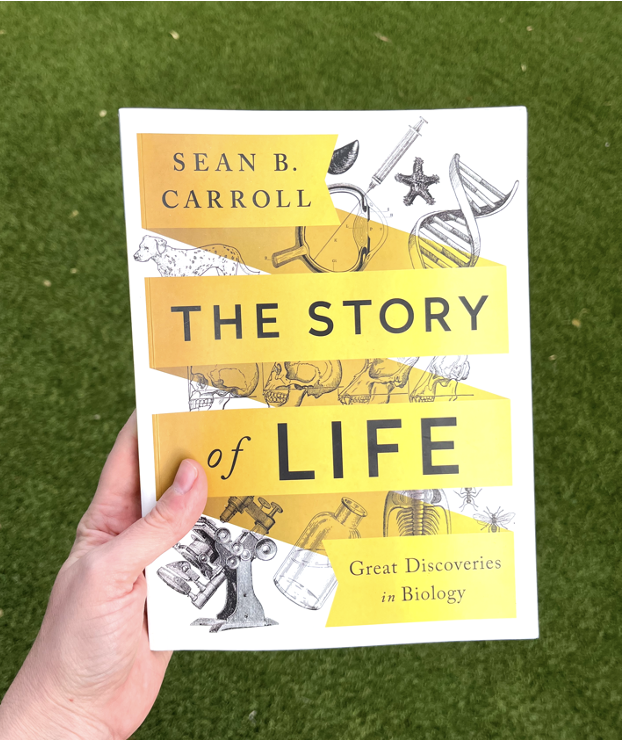
It’s hard to talk about speciation and biodiversity of life on Earth without talking about the cambrian explosion. Some scientists refer to this period as the “big bang of animal evolution.” How did SO MANY species evolve and what was that process like? You can…
- Check out this SciShow Youtube clip you can show students
- Have students read chapter 8 from The Story of Life by Sean Carroll about Charles Walcott’s discovery of fossils that documented the Cambrian explosion. (Note: I have no idea why this book is so expensive, but it’s worth buying one copy and making copies of specific chapters you want to use for students).

It’s fun to end the unit by posing students the question- if humans eventually colonize Mars, will those “Martian Humans” become a new species? It leads to great discussions!
Rock on,