Are you teaching earth science to high school students for the first time? I was in your shoes a few years ago. After a long tenure teaching high school biology, an earth science position opened up at my school. As a lover of all things rock-related, I was excited about the opportunity to make the change (and excited to teach older students. Who doesn’t love teaching juniors?!)
Despite my love of geology, I still had a busy year with a steep learning curve. The district I was in taught one semester of geology and one semester of astronomy. I had never taken an astronomy course and there were moments I felt I was in over my head. However, after a few years of teaching the course I came to love it and want to share some tips that helped me get through.
TIP 1: CHOOSE YOUR SEQUENCE

The sequence of your curriculum may be district mandated, but if it’s not the first thing you need to do is decide if you want to teach small to big (start with geology) or big to small (start with astronomy). Despite my textbook ending with astronomy and the big bang, I preferred to START with astronomy and work our way in. We started with stars and galaxies, zoomed in to the solar system, zoomed in more to earth processes, and ended the year with human impacts on those processes.
(You can see the pacing sequence of my year-long curriculum bundle HERE).
TIP 2: MODEL, MODEL, MODEL
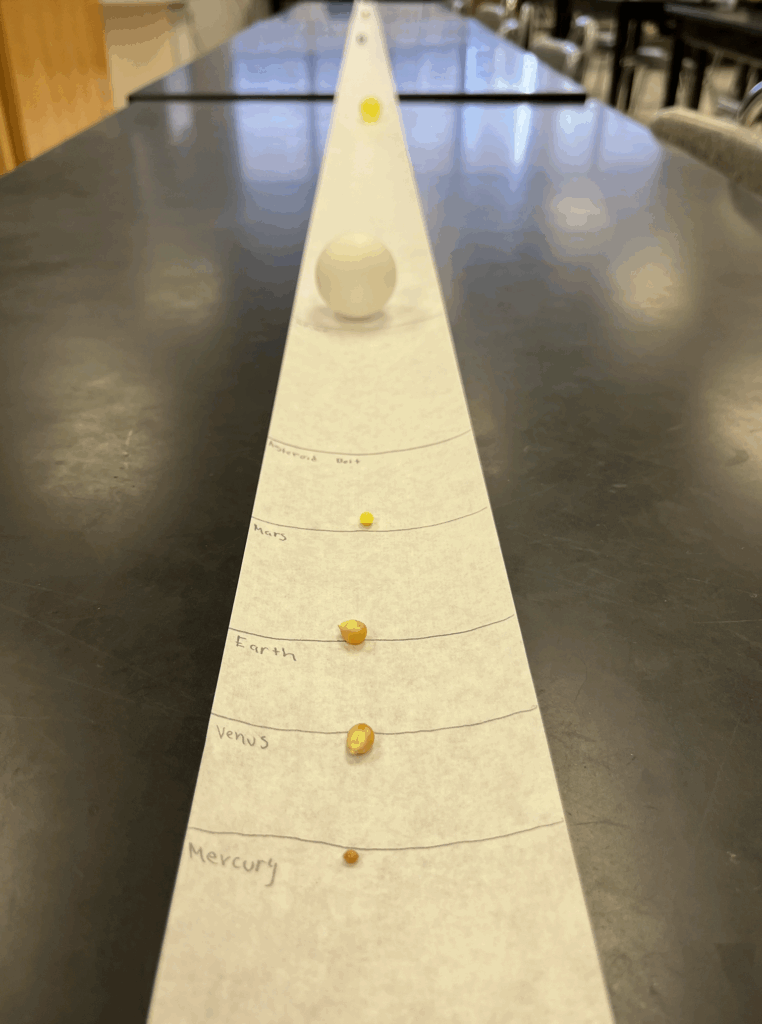
One thing unique to earth and space science opposed to other sciences, is that concepts deal with VAST amounts of distance and time. Trying to wrap your head around how far a light year really is, or how long ago dinosaurs roamed the earth can be difficult.
One method I used to help put these things into perspective is finding ways to model these concepts as often as possible. We used small objects and meter sticks to model the distance between planets, explored this size and scale website, modeled Earth’s water reservoirs, composition of gases in the atmosphere, and more!
TIP 3: MAKE IT HANDS ON
One of my biggest struggles that first year was finding ways to make earth science hands on. I was used to teaching biology where there are SO.MANY.LABS you can do. While I had a bunch of geology labs available, I struggled finding astronomy labs. Here are some ways I made the curriculum more hands on and interactive for students:
- MODEL CONCEPTS. Yes I just mentioned this, but I’m saying it again. Make an abstract concept easier to understand with a model. Teaching landforms? Have students model their formation with kinetic sand (this stuff is great because it never dries out). Teaching Hubble’s law? Model expansion of the universe with balloons.
- LOOK FOR VIRTUAL LABS. For some concepts that are abstract and difficult to make hands on, look for a virtual interactive. For example, if you are teaching spectroscopy and your school doesn’t have access to spectral tubes, you could have your students check out this Java lab. This blog post has a list of virtual labs to choose from.
- TRY STATIONS. Allowing students to get up and move around the room can greatly increase engagement. I created stations for different topics where students would explore mini-labs, arrange card sorts, watch video clips, and analyze data. You can browse them all here.
- STOP MOTION VIDEOS. Students are already glued to their phones, so have students use them in a productive way by having them create stop motion videos of an earth science concept. In the past I had students create videos showing the 3 types of plate boundaries and the future fates of the universe. If you are new to stop motion, check out my tips at this blog post.
TIP 4: UP THE RIGOR WITH DATA
I found plenty of earth science hands-on activities aimed at middle schoolers, but I struggled finding activities that would challenge my 16 and 17 year old students. I needed a way to still utilize these fun activities, but modify them to make them more rigorous.
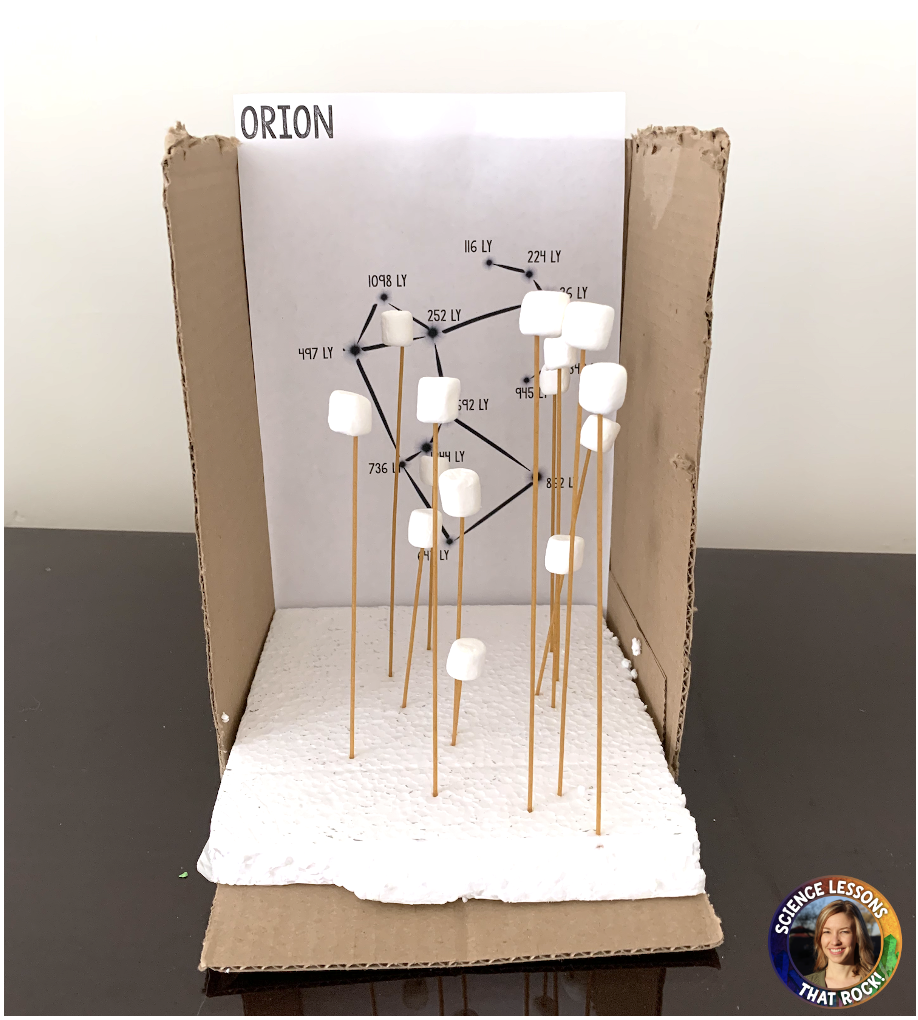
One easy way to increase the rigor for high school students is by having them analyze real world data. This strengthens their math skills, critical thinking skills, and helps prepare them for standardized tests. For example, in middle school you might have students build a 2D constellation out of toothpicks and marshmallows. At the high school level, I had students look up the distance of each star in a constellation, and figure out how to turn it into a 3D scaled model. You can find this lesson on my website or on TpT.
TIP 5: MAKE IT RELEVANT WITH CURRENT EVENTS
In biology, it seemed easy to connect the curriculum to students’ lives. Ecology, cells, vaccines… they are all very relevant. In earth science, you may encounter students that don’t really care about stars or minerals.
The easiest way to make concepts relevant is to link them to current events. Showing newly released images from the James Webb Space Telescope, or talking about earthquakes as they happened in real time made concepts more pertinent. I just so happened to be teaching plate tectonics in 2023 when a 7.8 magnitude earthquake occurred in Turkey. Each day students came into class asking for updates on the damage and survivors. It was powerful!
Try heading to sites like Science News or Newsela and finding current news articles that will be high interest while also supporting literacy skills.
I hope those tips make your year smoother! If you are interested in my complete year of earth and space science curriculum, you can find it here.
Rock on,